Ever wondered what happens when lead meets extreme heat? The leads melting point isn’t just a number—it’s a gateway to understanding material science, industrial safety, and environmental impact. Let’s dive into the molten world of lead and uncover what makes it so unique.
Understanding the Basics of Leads Melting Point

The leads melting point is a fundamental physical property that defines the temperature at which solid lead transitions into a liquid state. This critical threshold is essential for industries ranging from construction to electronics, where precise thermal control is non-negotiable.
What Exactly Is the Leads Melting Point?
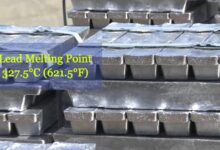
The leads melting point is scientifically recorded at 327.5°C (621.5°F). This value is well-documented by authoritative sources such as the WebElements Periodic Table, a trusted resource for elemental data. At this temperature, lead undergoes a phase change from solid to liquid without decomposing.
- Lead melts at 327.5°C under standard atmospheric pressure.
- The process is reversible—cooling liquid lead below this point solidifies it.
- Impurities can slightly alter the observed melting point in industrial settings.
Why Is This Temperature Significant?
The relatively low leads melting point compared to other metals like iron (1538°C) makes it highly workable in manufacturing. It allows for easier casting, soldering, and recycling processes. However, this low threshold also poses risks, especially in fire-prone environments where lead components might unexpectedly liquefy.
“The low melting point of lead has been both a blessing and a curse in metallurgy—enabling ancient civilizations to craft tools and pipes, yet contributing to widespread contamination when mishandled.” — Dr. Elena Rodriguez, Materials Scientist
Historical Context of Lead and Its Melting Behavior
Lead has been used by humans for over 9,000 years. Ancient Mesopotamians and Romans were among the first to exploit the leads melting point for practical applications. Their ability to melt and shape lead revolutionized plumbing, construction, and even cosmetics.
Ancient Civilizations and Early Metallurgy
The Romans famously used lead in aqueducts and water pipes—fistulae—because its low leads melting point allowed them to cast complex shapes using primitive furnaces. Archaeological evidence shows that Roman lead smelting sites reached temperatures sufficient to exceed the leads melting point, enabling mass production.
- Roman engineers melted lead at around 330–350°C using charcoal-fired kilns.
- Lead was also used in weights, seals, and even wine sweeteners (a dangerous practice due to toxicity).
- The ease of melting contributed to its widespread misuse in food and drink containers.
Industrial Revolution and Modern Advancements
During the 18th and 19th centuries, the leads melting point became central to industrial innovation. With the advent of steam engines and electrical systems, lead’s malleability and low melting temperature made it ideal for soldering and battery production.
According to the Encyclopedia Britannica, the development of the lead-acid battery in 1859 by Gaston Planté relied heavily on understanding the thermal behavior of lead, including its precise leads melting point.
Scientific Principles Behind the Leads Melting Point
To truly grasp the significance of the leads melting point, we must explore the atomic and thermodynamic forces at play. Melting is not merely a temperature event—it’s a disruption of molecular order.
Atomic Structure and Bonding in Lead
Lead (Pb) is a post-transition metal with an atomic number of 82. Its electron configuration ends in 6p², contributing to weak metallic bonding. This weak interatomic force is a primary reason why the leads melting point is lower than most structural metals.
- Lead has a face-centered cubic (FCC) crystal structure.
- The large atomic radius and relativistic effects in heavy elements reduce bond strength.
- These factors collectively lower the energy required to break the lattice—hence the low leads melting point.
Thermodynamics of Phase Transition
Melting involves absorbing latent heat without changing temperature. For lead, the enthalpy of fusion is approximately 4.77 kJ/mol. This means that once lead reaches its leads melting point, additional energy goes into breaking bonds rather than raising temperature.
This principle is crucial in industrial processes where precise heat input is needed to maintain molten lead without overheating, which could release toxic fumes.
“At the leads melting point, every joule of energy counts. Too little, and the metal remains solid; too much, and you risk vaporization and exposure.” — Industrial Safety Manual, OSHA Reference Guide
Factors That Influence the Observed Leads Melting Point
While the standard leads melting point is 327.5°C, real-world conditions can shift this value. Several variables affect how and when lead actually melts in practical applications.
Effect of Impurities and Alloys
Pure lead melts at 327.5°C, but commercial lead often contains traces of antimony, tin, or silver. These elements can either raise or lower the effective melting point. For example:
- Adding antimony increases hardness and slightly raises the melting point.
- Tin-lead alloys (like 60/40 solder) have a eutectic melting point of ~183°C—much lower than pure lead.
- Impurities can create localized hot spots or uneven melting during casting.
This is why alloy composition is tightly controlled in electronics manufacturing, where precise leads melting point behavior ensures reliable solder joints.
Pressure and Atmospheric Conditions
Although lead’s melting point is typically measured at 1 atm, changes in pressure can have minor effects. Unlike water, lead expands upon solidification, so increased pressure slightly lowers the melting point—a phenomenon explained by the Clausius-Clapeyron equation.
In vacuum environments or high-pressure industrial reactors, these shifts are usually negligible but must be accounted for in precision applications like aerospace component fabrication.
Industrial Applications Relying on the Leads Melting Point
The leads melting point is not just a scientific curiosity—it’s a cornerstone of several major industries. From energy storage to radiation shielding, the ability to melt and reform lead is indispensable.
Battery Manufacturing and Recycling
Over 80% of lead produced globally is used in lead-acid batteries. During manufacturing, lead plates are cast by heating above the leads melting point and pouring into molds. In recycling, old batteries are smelted at temperatures exceeding 330°C to recover lead.
- Recycling facilities must maintain strict temperature control to avoid lead oxide formation.
- The low leads melting point makes recycling energy-efficient compared to aluminum or steel.
- Modern plants use closed-loop systems to capture fumes and prevent environmental release.
According to the U.S. Environmental Protection Agency (EPA), lead-acid battery recycling is over 99% efficient in the U.S., largely due to the predictable behavior at the leads melting point.
Soldering in Electronics
Although lead-free solders are now common, many legacy and high-reliability systems still use tin-lead alloys. The leads melting point in these mixtures is engineered to be lower than pure lead, enabling precise, low-temperature joins.
For instance, the eutectic 63/37 tin-lead alloy melts sharply at 183°C, making it ideal for circuit board assembly. Understanding how lead behaves near its melting point ensures durable electrical connections.
Health and Safety Risks at the Leads Melting Point
While melting lead is technically feasible, it poses serious health hazards. When heated near or above the leads melting point, lead can release toxic fumes and particulates.
Toxicity of Lead Vapors and Fumes
Although lead has a high boiling point (1749°C), it begins to oxidize and emit fumes at temperatures as low as 400–500°C. In poorly ventilated areas, these fumes can cause acute lead poisoning.
- Inhalation of lead oxide fumes can damage the nervous system, kidneys, and reproductive organs.
- Symptoms include headaches, abdominal pain, and cognitive decline.
- Chronic exposure is linked to developmental issues in children.
The CDC’s National Institute for Occupational Safety and Health (NIOSH) warns that any operation involving the leads melting point must include fume extraction and personal protective equipment (PPE).
Safety Protocols and Regulatory Standards
OSHA (Occupational Safety and Health Administration) sets permissible exposure limits (PEL) for lead at 50 µg/m³ over an 8-hour workday. Facilities that melt lead must comply with strict ventilation, monitoring, and worker training requirements.
Key safety measures include:
- Using local exhaust ventilation (LEV) systems near melting points.
- Providing respirators and protective clothing.
- Conducting regular blood lead level testing for workers.
- Storing molten lead in covered crucibles to minimize vapor release.
“Melting lead without proper controls is like playing Russian roulette with your health. The leads melting point may be low, but the risks are sky-high.” — Safety Officer, Metalworks Inc.
Environmental Impact of Melting Lead
The environmental consequences of reaching the leads melting point are profound. Improper handling can lead to soil contamination, water pollution, and long-term ecosystem damage.
Air Pollution and Atmospheric Release
When lead is melted in uncontrolled environments—such as informal recycling operations—fumes can escape into the atmosphere. These particles travel long distances and settle in soil and water bodies.
- Lead particulates contribute to urban air pollution, especially in developing countries.
- Atmospheric lead can enter the food chain through crops and livestock.
- The WHO classifies lead as one of the top ten chemicals of major public health concern.
Soil and Water Contamination
Spilled molten lead or improper disposal of slag from melting processes can leach into groundwater. Once in the environment, lead does not degrade and accumulates over time.
Studies show that areas near informal battery recycling sites have soil lead levels exceeding 10,000 ppm—thousands of times above safe limits. Children playing in such areas face severe developmental risks.
The World Health Organization (WHO) emphasizes that preventing lead release at the melting stage is far more effective than cleanup after contamination.
Modern Alternatives and the Future of Lead Use
Given the dangers associated with the leads melting point, researchers and industries are actively seeking safer alternatives. While lead remains irreplaceable in some applications, innovation is reducing its dominance.
Lead-Free Solders and Alloys
Since the RoHS (Restriction of Hazardous Substances) directive in the EU, electronics manufacturers have shifted to lead-free solders based on tin-silver-copper (SAC) alloys. These have higher melting points (around 217–220°C) but eliminate lead exposure risks.
- Lead-free solders require more energy to melt, increasing production costs.
- Some high-reliability sectors (e.g., aerospace, medical) still permit lead due to superior joint reliability.
- Research continues into low-melting, non-toxic alternatives.
Advanced Battery Technologies
Lithium-ion, sodium-ion, and solid-state batteries are gradually replacing lead-acid systems in vehicles and grid storage. These technologies operate without lead, thus eliminating the need to reach the leads melting point during production or recycling.
However, lead-acid batteries remain dominant in automotive starting systems due to their reliability, low cost, and established recycling infrastructure.
According to the International Energy Agency (IEA), lead-acid batteries will still account for nearly 50% of automotive battery demand through 2030, despite the rise of electric vehicles.
Measuring and Monitoring the Leads Melting Point in Labs
Accurate determination of the leads melting point is vital for quality control and research. Scientists use various techniques to observe and record this phase transition with high precision.
Differential Scanning Calorimetry (DSC)
DSC is a common method for measuring the leads melting point. It detects heat flow differences between a sample and a reference as temperature increases. The endothermic peak corresponds to the melting point.
- DSC can detect impurities by observing melting point depression.
- It requires only milligram quantities of lead.
- Results are highly reproducible under controlled conditions.
Thermal Imaging and Pyrometry
In industrial settings, non-contact methods like infrared pyrometers and thermal cameras monitor the temperature of molten lead in real time. These tools ensure that furnaces operate just above the leads melting point without unnecessary overheating.
This not only improves energy efficiency but also reduces oxidation and fume generation.
“Seeing is believing—thermal imaging lets us watch lead melt without touching it, keeping workers safe and data accurate.” — Lab Technician, Materials Testing Center
What is the exact leads melting point?
The exact leads melting point is 327.5°C (621.5°F) at standard atmospheric pressure. This value is consistent across scientific literature and is used as a reference in metallurgy and material science.
Can lead melt at room temperature?
No, lead cannot melt at room temperature, which is typically around 20–25°C. The leads melting point is 327.5°C, far above ambient conditions. Specialized conditions like extreme pressure or nanoscale confinement do not significantly lower this point in practical scenarios.
Is it safe to melt lead at home?
No, melting lead at home is extremely dangerous. It releases toxic fumes that can cause severe health issues, including neurological damage. The EPA and CDC strongly advise against amateur lead melting. Always use professional, ventilated facilities with proper safety gear.
How does alloying affect the leads melting point?
Alloying can significantly alter the leads melting point. For example, tin-lead eutectic alloy melts at 183°C, much lower than pure lead. Conversely, adding antimony can slightly increase the melting point while improving mechanical strength.
Why is the leads melting point important in recycling?
The leads melting point is crucial in recycling because it determines the energy and equipment needed to recover lead from used batteries and components. Its relatively low value makes recycling efficient, but proper fume control is essential to prevent environmental and health hazards.
Understanding the leads melting point is more than a scientific exercise—it’s a key to unlocking safer industrial practices, environmental protection, and technological innovation. From ancient plumbing to modern batteries, this property has shaped human progress. While the risks are real, so are the solutions. With proper safety measures, regulatory compliance, and a push toward alternatives, we can harness the benefits of lead while minimizing its dangers. The future may see reduced reliance on lead, but for now, mastering its melting behavior remains essential across multiple fields.
Further Reading:
